Barbell & plate guide
Plate colors, sizes and weights, plus barbell and collar dimensions, the reference behind the calculator. Numbers follow the IWF weightlifting standard; individual brands vary slightly.
Plate color codes
Competition kg plates follow a fixed color code, so an experienced eye reads the load at a glance. The plates below are drawn to the standard – embossed, naturally, with the only brand that matters here.
- 25 kg · Red
- 20 kg · Blue
- 15 kg · Yellow
- 10 kg · Green
- 5 kg · White
Below 10 kg, weights are usually smaller steel “change plates” rather than full-diameter bumpers: 5 kg white, 2.5 kg red, 1.25 kg chrome, and fractional plates (also called micro plates) down to 0.25 kg for micro-loading.
How a loaded barbell should look
There's a right way to load a bar, and experienced lifters read it at a glance. The rules are about safety and force, not just neatness:
- Large plates on the inside. Load the heaviest plates first, closest to the collar, then work outward in descending order. The inside plates take most of the force when a loaded bar hits the ground, and big plates absorb it better.
- Use big plates over many small ones. A single 25 kg beats a stack of 5s. As you add weight across sets, swap duplicate small plates for one larger plate.
- Always use collars. They stop the plates shifting mid-lift, non-negotiable for anything overhead.
- Match both sides. Same plates, same order, mirrored left and right, pushed flush with no gaps.
Two things to avoid: technique plates mixed in with bumpers (they're not built to be dropped), and dropping a bare bar or one carrying only a single small plate a side.
Bumper vs iron plates
Bumper plates are rubber-coated and built to be dropped – Olympic lifters and CrossFitters bounce them off the platform, which also lets you pull deadlifts from a consistent height and spares the floor. Competition bumpers share the 450 mm diameter at every weight and follow the kg color code. Iron plates are thinner and cheaper per kg, so they're typical for the small “change” sizes and for lifts you rack rather than drop (squat, bench, press). Plenty of home and garage gyms mix the two: bumpers for the big lifts, iron for the change plates.
For jumps smaller than the lightest plate, fractional plates (a.k.a. micro plates) go down to 0.25 kg / 0.25 lb, so you can micro-load a stalling lift. The calculator uses them automatically when they get you an exact total.
What plates are made of
Plates are made from a handful of materials, chosen for the sport and the budget. It is the biggest driver of how thick a plate is, how it survives being dropped, and what it costs.
| Material | Best for | Trade-off |
|---|---|---|
| Cast iron | General strength training | The traditional, cost-effective standard. Thicker than steel and can crack or chip if dropped, so it is usually coated in enamel, hammertone or a basic rubber casing to resist rust. |
| Solid steel (calibrated) | Competitive powerlifting | Machined from dense, crack-resistant steel and cut incredibly thin, so elite lifters can pack huge loads onto one sleeve without running out of space. Precisely calibrated, and priced accordingly. |
| Rubber bumper (virgin) | Olympic weightlifting, CrossFit | A steel hub wrapped in thick rubber, built to be dropped from overhead safely. High-end plates use 100% virgin rubber: dense, odorless, durable, with a controlled dead bounce. |
| Rubber bumper (recycled) | Budget and outdoor gyms | Crumb rubber from recycled tires. Much cheaper and great outdoors, but thicker, bouncier and often smells strongly of the binders used. |
| Urethane | Premium commercial gyms | A high-end alternative for bumpers and coated iron. Exceptionally durable, completely odorless and resistant to scuffing and tearing, but significantly pricier than rubber. |
| Vinyl and cement | Beginner budget sets | The cheapest plates: a plastic shell filled with sand or cement. Very bulky for their weight and prone to splitting, so they are unsuitable for serious or heavy lifting. |
Plate dimensions
Full-size competition discs all share a 450 mm diameter and a 50 mm center hole; only the thickness changes with weight.
| Plate | Color | Diameter | Thickness |
|---|---|---|---|
| 25 kg | Red | 450 mm | ≈ 67 mm |
| 20 kg | Blue | 450 mm | ≈ 54 mm |
| 15 kg | Yellow | 450 mm | ≈ 43 mm |
| 10 kg | Green | 450 mm | ≈ 35 mm |
Barbell dimensions
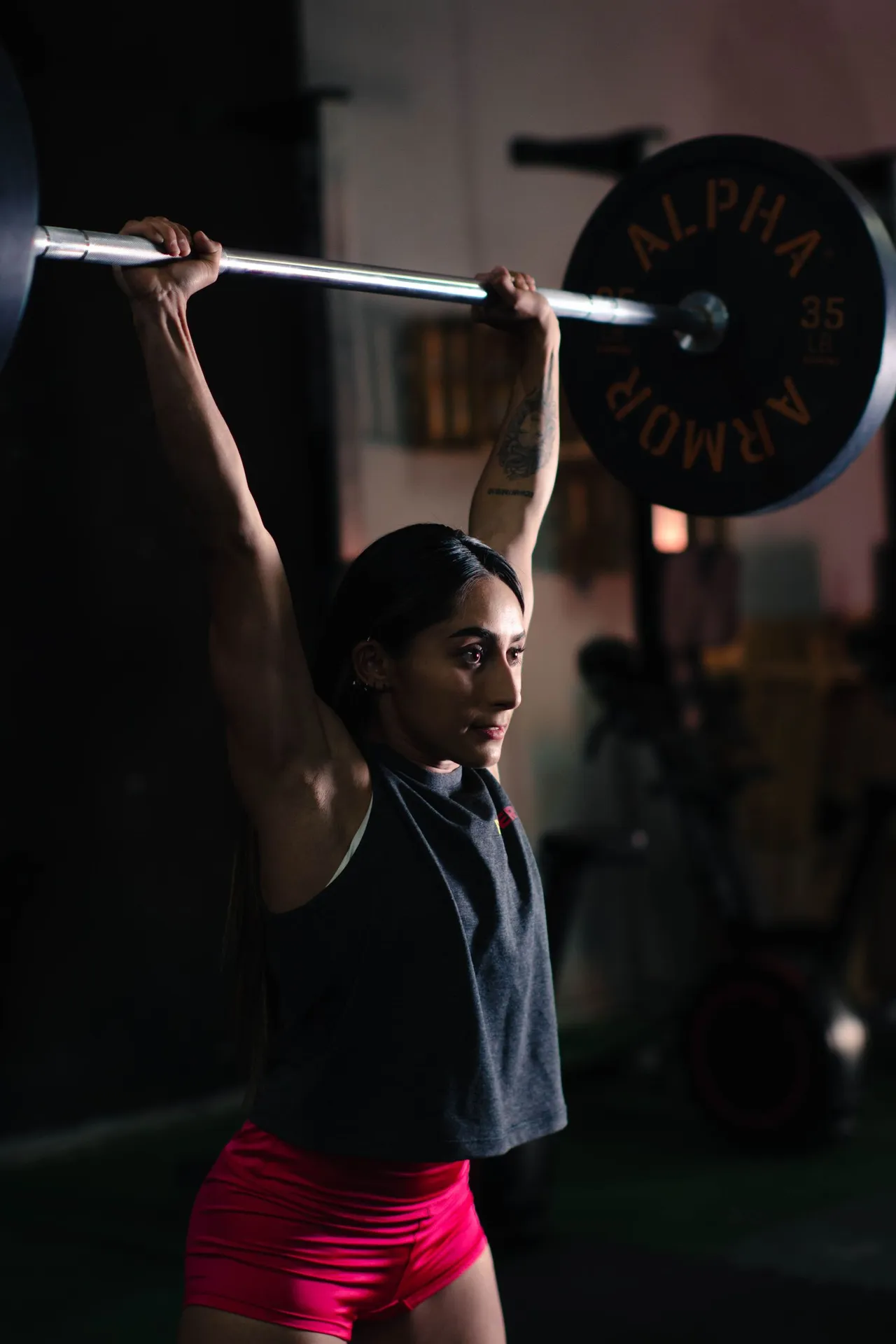
The standard Olympic bars. The women's bar is shorter and lighter with a thinner 25 mm shaft, easier to grip for smaller hands. A US “45 lb” bar is essentially the 20 kg bar (20 kg ≈ 44 lb). The 10 kg training bar – also sold as a beginner, youth or technique bar – is shorter and lighter again, but keeps the 50 mm sleeves so it still takes full-size plates. Dimensions vary by brand.
| Spec | Men's bar | Women's bar | Training bar |
|---|---|---|---|
| Weight | 20 kg (≈ 44 lb) | 15 kg (≈ 33 lb) | 10 kg (≈ 22 lb) |
| Total length | 2200 mm | 2010 mm | ≈ 1720 mm |
| Shaft / grip diameter | 28 mm | 25 mm | 25 mm |
| Sleeve diameter | 50 mm | 50 mm | 50 mm |
| Loadable sleeve length | ≈ 415 mm | ≈ 320 mm | ≈ 240 mm |
| Distance between sleeves | ≈ 1310 mm | ≈ 1310 mm | ≈ 1210 mm |
Collars
Collars lock the plates on. Competition collars are a real weight; spring clips are negligible. The calculator counts plates only, so add collar weight yourself if it matters for your total.
| Type | Weight (each) | Per pair |
|---|---|---|
| Competition collar | 2.5 kg | 5 kg |
| Spring clip | ≈ 0.25 kg | ≈ 0.5 kg |
| Lock-jaw / plastic | ≈ 0.2–0.5 kg | ≈ 0.4–1 kg |
Where to buy plates
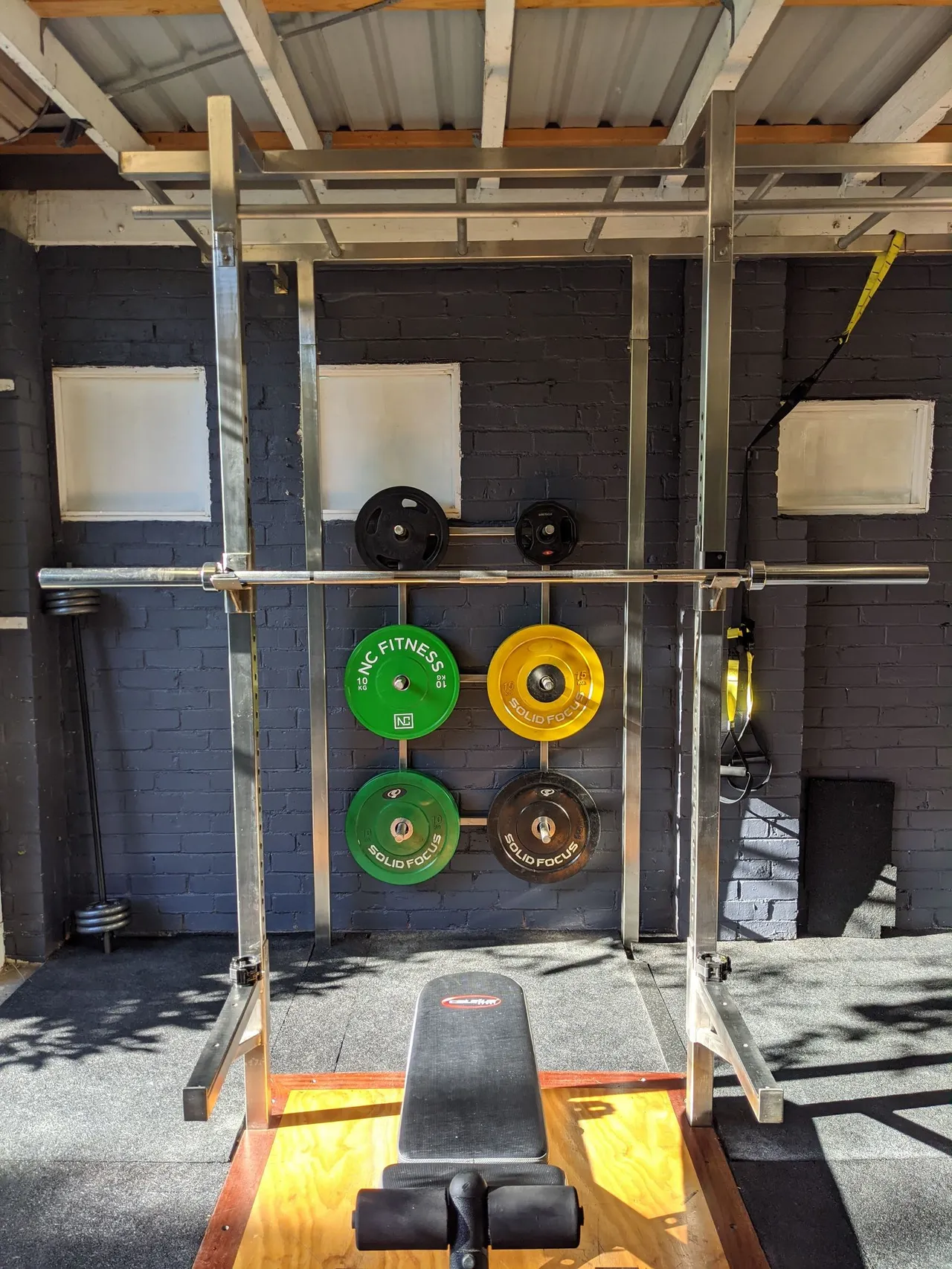
Which plate is best depends on what you lift. For Olympic weightlifting, pay for IWF-certified competition bumpers that share the exact 450 mm diameter and calibrated weight. For a home or garage gym, mix bumpers for the big lifts with cheaper iron change plates, and buy from an established maker or its authorized dealer so the stamped weight is honest and the finish lasts. Iron plates barely wear, so the used market is a smart place to fill out a set. Below is a tour of the notable makers by region.
Europe
- Eleiko · Sweden
- The Rolls-Royce of weightlifting. IWF certified, obsessively engineered bars and calibrated plates that turn up at world championships. The benchmark others are measured against, and priced to match.
- ATX Fitness · Germany
- Arguably the best value for money in Europe. German-engineered bars, plates and racks with a huge rack-attachment ecosystem, a favourite for kitting out a serious home gym without Eleiko money.
- KingsBox · Slovenia
- An innovative newcomer offering excellent value and highly customizable rigs and rack attachments. Strong on functional-fitness gear for garage and box setups.
North America
- Rogue Fitness · USA
- The indestructible workhorse that dominates CrossFit and home and garage gyms. Enormous catalogue, made-in-USA options and a reputation for gear that simply does not wear out.
- REP Fitness · USA
- The top direct challenger to Rogue, hitting a great balance of quality and price. A common pick for a first home gym where budget matters but quality still counts.
Asia
- Uesaka · Japan
- Elite Olympic weightlifting equipment with incredible durability and a softer, tackier knurl that lifters either love or covet. A staple of major international competitions.
- ZKC & DHS · China
- IWF certified competition brands known for dead-bounce plates and extremely passive knurling. ZKC (Zhangkong) and DHS (Double Happiness) have both supplied Olympic Games.
- LUXIAOJUN · China
- High-quality weightlifting gear at a competitive price, from the brand of the legendary Chinese lifter. Good value bars and bumpers aimed squarely at Olympic lifting.
Oceania
- AlphaFit · Australia
- A premium local manufacturer with excellent build quality for functional fitness, Australian made and popular with commercial gyms across the region.
- Australian Barbell Co · Australia
- A legacy local brand trusted for longevity, with stainless and needle-bearing options for lifters who want a bar to last decades.
- Solid Strength · New Zealand
- An excellent balance of quality and price across barbells, plates and racks, and a go-to for kitting out a New Zealand home gym.
- Industrial Athletic · New Zealand
- A premium NZ brand making high-quality Olympic bars and functional-fitness gear, aimed at serious lifters and commercial setups.
Links go to each maker's official site. Plates Calc isn't sponsored by and earns nothing from any brand here, this is just a lay of the land. Once your plates arrive, the calculator will load any target against the set you actually own.
Barbell trivia
Why the men's bar has a center knurl
Look closely at a 20 kg men's bar and there's a rough patch of knurling dead center – the women's 15 kg bar has none. It's a historical leftover: early Olympic weightlifting included one-arm lifts, and the center knurl gave grip for single-arm work. The one-arm snatch was dropped in 1924, but the men's bar never changed. The women's bar, introduced for the 2000 Sydney Games, was simply designed without it.
Shaft diameter and "whip"
Not all 20 kg bars are equal. An Olympic weightlifting bar uses a 28 mm shaft that flexes – the "whip" lets lifters store and release energy in explosive lifts like the clean & jerk. A powerlifting bar runs 29 mm or thicker to stay stiff under heavy static squats and benches. The women's bar drops to 25 mm for smaller hands.
The first modern barbell
Before the 1900s, strongmen used thick, fixed-sleeve bars. The rotating sleeve, which spins so plates don't torque your wrists, was pioneered in Germany: Franz Veltum and Kaspar Berg built early revolving barbells around 1905–1910, and the "Berg Barbell" became the global standard after the 1928 Amsterdam Olympics.
Why every red plate looks slightly different
The federations only require plates to be coated in the standard colors to be approved, not a specific shade. The exact hue, and so the Pantone or RAL code, is left to each manufacturer, which is why a red Eleiko plate can look a little different from a red Rogue or Uesaka. Because the code isn't locked down, several makers even offer custom plates: a commercial gym can submit its own RAL or Pantone code to match its brand colors while still reading as the standard red, blue, yellow and green.
Why competition plates share one diameter
Competition bumpers are all 450 mm across so the bar always sits at the same height off the floor, only the thickness changes with weight. The strict color code does the rest: experienced loaders read the bar by its color pattern, not a calculator.
The math
Loading is symmetric: per-side weight = (target − bar) ÷ 2, mirrored on both ends. See how many plates that is for the milestone chart, or let the calculator do it for any weight and any plate set.
FAQ
- Where should I buy weight plates?
- Buy from an established manufacturer or its authorized dealer rather than an unbranded marketplace listing, so weights are accurate and the finish lasts. For competition Olympic lifting, look for IWF-certified plates (Eleiko, Uesaka, ZKC). For a value home or garage gym, Rogue and REP dominate North America, ATX and KingsBox are strong in Europe, and AlphaFit, Australian Barbell Co, Solid Strength and Industrial Athletic cover Australia and New Zealand. The used market is also excellent for iron plates, which barely wear.
- What do the barbell plate colors mean?
- They're the IWF weightlifting standard: 25 kg red, 20 kg blue, 15 kg yellow, 10 kg green, 5 kg white. It lets you read the load by color from across the gym. Pound plates aren't standardized the same way, though many follow a similar scheme.
- How thick is a barbell plate?
- Full-size 450 mm competition bumpers get thicker with weight, roughly 35 mm for a 10 kg up to about 67 mm for a 25 kg. Thickness matters because it sets how many plates fit on the sleeve.
- What's the difference between bumper plates and iron plates?
- Bumper plates are rubber-coated and made to be dropped, so they suit Olympic lifts and CrossFit and let you deadlift from a consistent height while protecting the floor. Competition bumpers all share the 450 mm diameter and follow the kg color code. Iron plates are thinner and cheaper, common for the small change sizes and for lifts you rack rather than drop. Fractional plates, also called micro plates, go down to 0.25 kg or 0.25 lb for micro-loading.
- How long is an Olympic barbell?
- A men's 20 kg bar is 2200 mm long with a 28 mm shaft; a women's 15 kg bar is 2010 mm with a thinner 25 mm shaft. Both use 50 mm sleeves that fit Olympic plates.
- Do collars add to the weight?
- Yes. Competition collars are 2.5 kg each (5 kg per pair); spring clips are about 0.25 kg each. Plates Calc computes the plates only – add collar weight on top if you use heavy ones.
- Why does the men's barbell have a center knurl?
- It's a historical leftover from early Olympic one-arm lifts, which needed a center grip. The one-arm snatch was dropped in 1924 but the men's 20 kg bar kept the center knurl. The women's 15 kg bar, introduced in 2000, was designed without it.
- What is barbell whip?
- Whip is the flex of the shaft. Olympic weightlifting bars use a 28 mm shaft that flexes to store and release energy in explosive lifts; powerlifting bars are 29 mm or thicker to stay stiff under heavy static loads.